National TRIO DAY
TRIO National Day
As TRIO Day approaches, I get excited because I get to share with all of you the reason I am here today, the reason I went to college and how that decision changed my life. Programs like TRIO are incredibly important and must continue to receive funding. To understand why, it helps to know how they began.
TRIO programs started in the 1960s during the War on Poverty under the U.S. Office of Economic Opportunity (OEO). This independent agency created several social welfare programs, including Job Corps, Head Start, and a college preparatory demonstration project called Upward Bound. These programs were designed to support low-income students in continuing their education.
Over time, more programs were added under TRIO to mentor and tutor students, helping them attend college, receive support while enrolled, and even access guidance after graduation. Some programs support adults who want to return to school. These services can be pivotal for young students in middle and high school.
I was part of TRIO Talent Search starting my freshman year of high school. My advisor was Tia Short. We met with her about every two weeks because she worked with multiple schools. The more I talked with her, the more I got to know her. She was a huge motivator and sparked my interest in college. She made me believe it was possible.
She shared stories and brought in students from other programs to talk about their experiences and how they succeeded. We participated in community service, which helped us build our résumés and prepare for college applications. She wasn’t always at our school, but when she was, her presence was such a support. During my junior and senior years, I remember waiting with anticipation to see her, to ask about her dachshund pups, but also to ask about scholarships.
She reviewed our essays and helped us apply to colleges. TRIO covered our application fees and paid for ACT and SAT retakes, which was such a relief. My parents didn’t finish high school. They came to the U.S. with big hopes for their children, but they had no idea how to navigate higher education or understand all the terminology. I was the first in my family to go to college. Tia was great at breaking everything down and explaining the resources available to us.
She helped us understand FAFSA and guided us through filling it out. That support helped my parents feel more at ease with the whole process. It was a blessing. Between FAFSA, scholarships, and working two jobs my senior year, I was able to go to college with zero debt.
Through TRIO, I was connected to other programs such as CAMP (College Assistance Migrant Program) and TRIO Student Support Services in college. The continued mentorship, guidance, and tutoring throughout my four years helped me raise my GPA, which opened the door to more scholarship opportunities. CAMP also helped me secure an internship my freshman year in North Carolina, an incredible summer. I even had the chance to study abroad and see another part of the world.
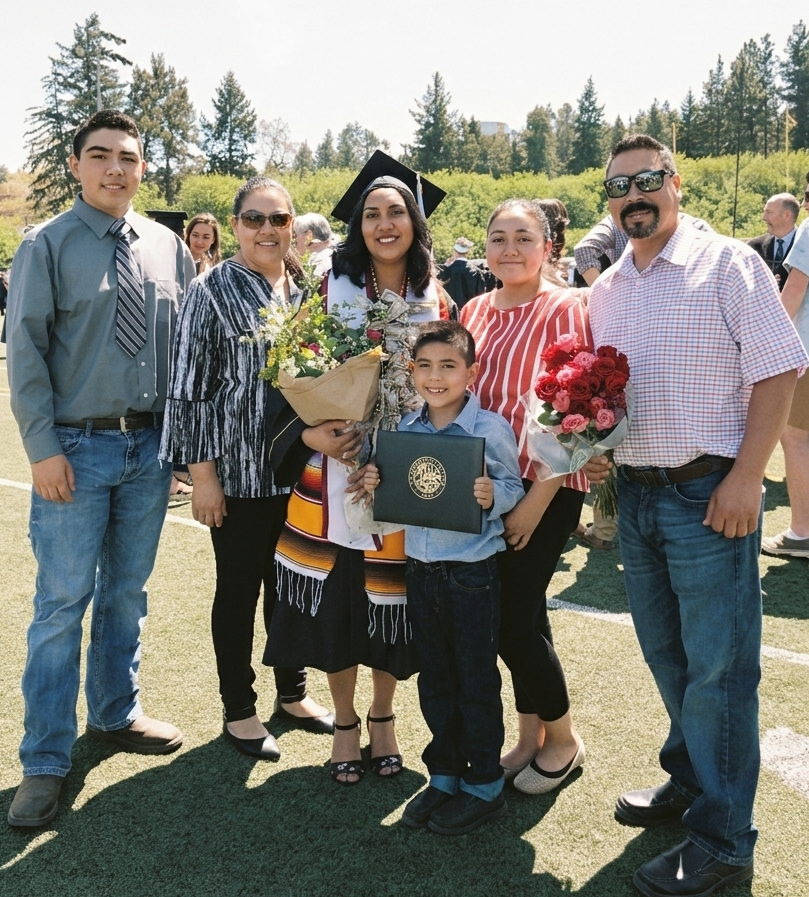
I earned my Bachelor of Arts in Spanish, Latin American Studies, and Sociology with an emphasis in Criminal Justice. It was amazing to be the first in my family to try something new and pave a new road. I showed my siblings that they could do it too if they wished. They also had TRIO by their side.
Three years later, I began working for the TRIO Educational Opportunity Center, a program that supports adults entering post-secondary education. It has been one of the most rewarding jobs I have ever had. I loved being on the other side of the program, understanding the terminology, and being able to communicate it in simpler terms for others.
During my time with the TRIO Educational Opportunity Center, I helped many people understand FAFSA and complete college applications, including refugees, formerly incarcerated individuals, and people in rehabilitation programs. These were people who had always wanted to go to school but never had the resources or that one person to guide them and say, “You can do this.”
One story that stays with me is about a woman in her 40s who was incarcerated when I first met her. From prison, we filled out her FAFSA and completed her college application together. After she was released, she enrolled in school. Every semester, she would call me to talk about her classes and her schedule. I helped connect her with disability services and other campus resources. She was in Oregon, and I was in Idaho, but we met regularly through Zoom.
She was incredibly committed. She even earned a TRIO scholarship. I was so proud of her. In just two years, she completed her associate’s degree and began applying for her bachelor’s. Her story is proof that it is never too late to begin again.
I am so grateful that I was able to be part of her journey. That truly was a full-circle moment for me. Thank you for reading, and I hope you enjoyed this reflection. #SupportTRIO